
Global Metal Fabrication Market Projected to Reach $32.47 Billion by 2032
The metal fabrication market is expanding globally, driven by industrial growth, advanced manufacturing technologies, and rising demand across sectors.
According to a research report by Maximize Market Research (MMR), the global metal fabrication market was valued at USD 22.48 billion in 2024 and is projected to reach USD 32.47 billion by 2032, growing at a compound annual growth rate (CAGR) of 4.7 percent during the forecast period.
Maximize Market Research, a market research and business consulting firm, analyzes industry trends, market size, and growth outlook through 2032 in its report, Metal Fabrication Market: Global Industry Analysis and Forecast (2025-2032). The market is segmented by material type, service type, end user industry, and region.
In a release highlighting the results of its report, industry analysts at MMR observed that the global metal fabrication sector is entering a phase of sustained technological advancement, driven by rapid adoption of CNC machining, robotic welding, laser cutting, and Industry 4.0 automation.
“Growing demand from automotive, aerospace, energy, and construction is strengthening the sector’s return potential, while competition among leaders such as Trumpf, Amada, Bystronic, and regional fabricators continues to attract fresh investments, partnerships, and innovation-driven market strategies,” the release stated. “The sector is accelerating as manufacturers adopt advanced CNC machining, robotic welding, laser cutting, and automated metal forming systems.”
Surging demand for customized sheet metal components, structural steel fabrication, and high-precision industrial parts continues to reshape global market dynamics. At the same time, rising investments in Industry 4.0, IoT-enabled monitoring, and digital fabrication platforms are transforming production efficiency and precision. Automation-driven workflows, smart factories, and regional expansion across Asia-Pacific remain key drivers, propelling the future of the metal fabrication market worldwide, MMR said in the release.
According to MMR, the rising demand for precision sheet metal fabrication, structural steel fabrication, and heavy fabrication services across the automotive, aerospace, energy, construction, and marine sectors is fueling market expansion, technological innovation, and competitive differentiation worldwide. However, the metal fabrication market faces challenges stemming from shortages of skilled labor, volatility of raw material prices, and supply chain constraints, and the emergence of additive manufacturing.
“The rise of additive manufacturing and 3D metal printing is reshaping production dynamics, compelling fabricators to adopt hybrid manufacturing models, workforce upskilling, and integrated fabrication solutions to maintain efficiency, quality, and competitive advantage,” the release stated.
Smart Fabrication, Industry 4.0 Provide Opportunities for Growth
According to the release, emerging opportunities are abundant as global demand surges in renewable energy projects, aerospace and defense fabrication, marine shipbuilding, and large-scale construction. The increasing adoption of smart fabrication equipment, IoT-enabled metal finishing, and Industry 4.0 technologies is providing lucrative avenues for growth, making the global metal fabrication market a high-potential landscape for investors, industrial manufacturers, and technology innovators.
Steel is reported to be emerging as the dominant material due to its superior strength, durability, and cost-efficiency across structural steel fabrication, sheet metal fabrication, and heavy fabrication services. Precision machining leads the service segment, powered by advanced CNC machining, multi-axis systems, and automated metal fabrication technologies.
These segments highlight market trends, growth drivers, competitive analysis, and lucrative opportunities, offering actionable insights for investors, industrial manufacturers, and technology innovators worldwide.
In segmenting the metal fabrication market by material type, service type, end user industry, and region, MMR analysts noted the impact of key trends, such as CNC machining, robotic welding, and smart fabrication innovations, that are driving the global market. Following are some of their observations.
Surging Demand for Precision Machined and Fabricated Metal Components: The global metal fabrication market is accelerating as automotive, aerospace, and defense sectors increasingly adopt sheet metal fabrication, structural steel fabrication, and high-strength alloy assemblies. This trend is reflected in the rising adoption of CNC machining, robotic welding, and laser cutting technologies.
Renewable Energy and Electronics Driving Lucrative Fabrication Opportunities: Expansion in wind turbine towers, solar mounting structures, power-grid components, and semiconductor metal parts is boosting demand for heavy fabrication services, metal processing, and precision machining. This trend is creating high-growth opportunities across North America, Europe, Asia Pacific, and South America, analysts noted.
Automation and Smart Fabrication Enhancing Operational Efficiency: Fabricators are deploying multi-axis CNC machining centers, fiber-laser cutting systems, and automated metal forming and bending equipment to reduce scrap, minimize errors, and achieve lights-out production. Industry 4.0, IoT-enabled monitoring, and digital fabrication technologies are transforming the market, enabling superior quality, faster lead times, and sustained profitability.
The analysts highlighted innovations in bending automation and advanced welding as examples of manufacturing technologies that are contributing to the growth of the metal fabrication market. One, the Trumpf Flex Cell bending automation system, was introduced by Trumpf at FABTECH 2024 and is now said to be “transforming automated sheet-metal fabrication.”
The system features lights-out production, double-sized material buffering, vacuum grippers, and TecZone Bend software. According to MMR, it “empowers fabricators to overcome labor shortages while boosting CNC machining, robotic welding, and high-precision metal forming efficiency globally.”
The analysts also stated that in October 2024, Amada Italia S.r.l. launched a dedicated Welding Technical Center in Piacenza, Italy, that addresses surging demand for high-precision automated welding and fabrication equipment. The center enables process optimization, customer training, and adoption of Industry 4.0-enabled metal fabrication technologies, supporting growth in sheet metal, structural steel, and heavy fabrication services across automotive, industrial, and machinery sectors, the analysts said.
Asia Pacific Region Leads Global Metal Fabrication Market
According to MMR, the Asia Pacific region leads the global market, fueled by China’s expansive manufacturing ecosystem, advanced CNC machining, robotic welding, laser cutting, and large-scale infrastructure projects. High-growth hubs, including India, Japan, and South Korea, are also driving market expansion by adopting Industry 4.0, IoT-enabled smart factories, automated sheet metal fabrication, structural steel production, and heavy fabrication services.
“North America and Europe remain competitive hotspots, with key players investing in precision CNC machining, automated welding, digital fabrication, and Industry 4.0-enabled production lines,” the release stated. “Adoption of IoT monitoring, digital twins, and automated material handling enhances operational efficiency, reduces lead times, and ensures superior quality control, fueling robust growth in sheet metal, structural steel, and industrial metal components markets worldwide.”
Other Strategic Growth Drivers and Technological Advancements
♦ Rising Global Manufacturing Output: Growing demand for sheet metal, structural steel, and precision-machined components across automotive, aerospace, energy, and heavy engineering is pushing fabricators to expand capacity and adopt high-strength alloys.
♦ Shift Toward Smart and Sustainable Production: Manufacturers are transitioning to energy-efficient fiber-laser cutting, optimized material utilization systems, and low-waste CNC machining workflows, enhancing sustainability and reducing operational costs.
♦ Industry 4.0 and IoT Revolution: Rapid integration of IoT-enabled monitoring, digital twins, smart robotics, and automated material handling is transforming fabrication accuracy, traceability, and workflow efficiency worldwide.
♦ Surging Demand for Premium and Custom Fabrication: Growth in EV components, wind turbine towers, semiconductor metal parts, and high-precision industrial assemblies is fueling demand for advanced, customizable, and high-tolerance metal fabrication solutions.
Digitization and Automation Are Fueling Growth of Metal Fabrication Equipment Market, Analysts Say
While the global market for equipment is projected to reach $94.53 billion by 2032, the U.S. market is forecast to hit $17.34 billion by the same year.
According to market research firm SNS Insider, the metal fabrication market is witnessing a gradual expansion, benefiting from increased demand within the construction, automotive, aerospace, and heavy machinery industries.
The size of the global market for metal fabrication equipment was valued at USD 68.30 billion in 2024 and is expected to reach USD 94.53 billion by 2032, growing at a CAGR of 4.15 percent over the forecast period of 2025–2032, according to a release from SNS Insider that highlights key findings of its “Metal Fabrication Equipment Market Report, 2025-2032.”
Global growth is expected to be driven by strong demand from the automotive, aerospace, and construction sectors. That demand is currently encouraging digital and robotics integration in a wide range of operations to boost efficiency and reduce costs. At the same time, deployments of smart manufacturing, including IoT-driven predictive maintenance, laser cutting systems, and robotic welding arms, are lifting productivity and product quality. Investments are also being driven by sustainability efforts, energy-efficient equipment, and waste‑recovery technologies, company analysts said in the release.
SNS Insider also analyzes the strategic growth of the U.S. metal fabrication equipment market, valued at USD 12.13 billion in 2024 and projected to hit USD 17.34 billion by 2032 on the strength of digitization, robotics, and reshoring initiatives that are expected to reshape the future of precision metal manufacturing. The market is forecast to grow at a compound annual growth rate (CAGR) of 4.57 percent during the years 2025 to 2032.
Growth of the U.S. market is projected to be driven by the accelerating adoption of precision robotic systems in automotive and aerospace manufacturing, government incentives for reshoring, and rising demand for welded, laser-cut, and formed metal components, the release stated.
Segmenting the market by equipment type
The SNS Insider report analyzes the metal fabrication equipment market by types of equipment, material, and end user.
The cutting equipment segment dominates the metal fabrication equipment market, accounting for 38 percent of total market share in 2024. Accelerating demand for high-precision cutting tools is seen as the key factor contributing to the projected industrial growth during the forecast period. These tools include laser cutters, plasma cutting systems, and waterjet cutting machines.
Advanced cutting technologies, used for precision in various industries such as automotive, aerospace, and shipbuilding, are capital-intensive and favored for better material usage. Automated and CNC-based cutting systems can aid in improving operational efficiency and reducing human error, and are likely to boost growth of the cutting segment, the release said.
By material
According to SNS Insider, steel is the leading material in the metal fabrication equipment market, holding a dominant 42 percent market share in 2024. And thanks to rising demand across industries like construction, automotive, and energy, steel continues to be the most widely fabricated material. In addition to offering the best combination of strength, durability, low cost, and versatility for the structural framework in most buildings, it is also regarded as an excellent choice for various applications, including machinery parts.
Rising emphasis on infrastructure creation and the manufacture of electric vehicles has further driven up the demand for steel fabrication, company analysts said in the release.
By end user
The largest end-user of metal fabrication equipment is the automotive segment, which, the study showed, held a 32 percent market share in 2024.
The growing need for fabricated parts, like chassis components, body frames, exhaust systems, and engine mounts, is driving the adoption of metal fabrication equipment by automotive manufacturers. Also creating demand for lightweight yet strong components is the expanding electric vehicle (EV) market, where advanced fabrication technologies such as laser cutting and robotic welding come into play.
“Moreover, with the high volume of production, manufacturers are also investing in automation for the quality of the product,” the release stated.
Companies listed in the report as “major players” in the metal fabrication equipment market include Hypertherm Associates Inc. (U.S.), Amada Corporation (Japan), Yamazaki Mazak Corporation (Japan), Sandvik AB (Sweden), and Trumpf Group (Germany), as well as Prima Industrie (Italy), Bystronic Laser AG (Switzerland), and BLM Group (Italy).
Laser Welding Equipment Market Is Poised for Steady Growth
A report from Future Market Insights examines the factors supporting—and possibly limiting—the growth of the global laser welding market.
The adoption of advanced welding technologies across the automotive, aerospace, electronics, and medical device industries today is rising, according to a release from Future Market Insights (FMI), a provider of market research reports and business intelligence.
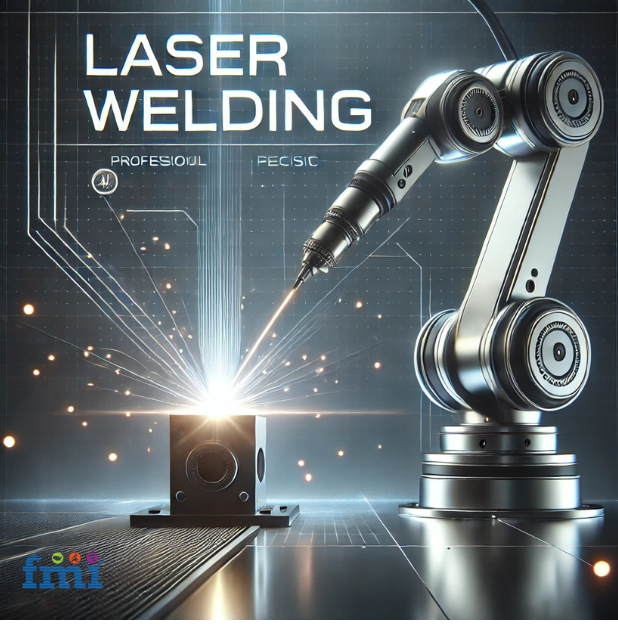
Manufacturing industries are increasingly relying on laser welding systems to ensure superior product performance, meet stringent quality standards, and enhance production efficiency. (Image courtesy FMI)
A good example of such a technology is laser welding, a technique that uses heat generated by highly concentrated laser beams to join two or more similar materials together.
Known for its precision and efficiency, laser welding creates strong, distortion-free welds, making it an indispensable tool in modern manufacturing processes. Although metals are the materials most commonly used in these welding techniques, plastic materials have also found application in the laser beam welding process.
In its report, Laser Welding Equipment Market Forecast and Outlook 2025-2035, Future Market Insights is projecting the laser welding market to grow from USD 2,925.8 million (2.9258 billion) in 2025 to USD 4,227.1 million (4.2271 billion) by 2035, reflecting a compound annual growth rate (CAGR) of 4.4 percent during the forecast period.
“This steady growth underscores the increasing adoption of laser welding technology across industries, driven by its precision, efficiency, and ability to meet evolving manufacturing demands,” FMI market analysts said in the release.
Demand for lightweight and eco-friendly materials, coupled with the shift toward industrial automation, is also spurring the adoption of laser welding systems. Industries are increasingly relying on these systems to ensure superior product performance, meet stringent quality standards, and enhance production efficiency.
The market is also bolstered by the rising need for fabricated metal products, advancements in manufacturing technologies, and the integration of innovative solutions such as robotics and IoT. In addition, the shortage of skilled personnel in certain regions has further accelerated the demand for automated laser welding equipment.
As the laser welding market continues to evolve, manufacturers are focusing on integrating automation to address the complexities of modern industrial applications. This shift is paving the way for more sustainable, efficient, and cost-effective welding solutions globally, the release stated.
“Laser beam welding is highly beneficial in welding small parts, as it can weld such materials with minimal residue and thermal distortion,” the release said.
According to FMI, the process is being adopted for various industrial applications because it can be completely automated, achieving high welding speeds. Market growth is also impacted by the increasing demand from several end-user industries, such as automotive, medical, and electronics, across the world.
“The market is also driven by the growing demand for fabricated metal products, the development of heavy industrial equipment, advancement in manufacturing processes, and the adoption of the latest technologies,” the release stated. “Additionally, the demand for automated equipment is also increasing due to the shortage of skilled personnel in some of the regions studied.”
FMI analysts expect the growing momentum towards generation of energy through renewable sources to propel growth of the laser welding market over the analysis period. Further demand is expected from within the electronics industry, where manufacturers are confronted with the challenges of fabricating minute electronic components, such as circuit boards, transistors, and integrated circuits.
The analysts also noted steady adoption of the laser welding process in the automotive industry, wherein approximately 20 percent of the welding operations are performed using laser beam welding equipment. This percentage is expected to rise even further in the upcoming years due to improvements observed in the overall productivity, quality, and weld strength made possible through laser welding.
“Automotive parts, such as engine components, solenoids, alternators, fuel filters, and injectors, among others, have been increasingly manufactured through the laser beam welding process,” the analysts said in the release.
With the rise of electric vehicles and lightweight materials, laser welding is essential for ensuring robust and efficient component assembly. Major automakers are reported to be investing heavily in automated welding systems to enhance production efficiency and meet evolving consumer demands, further fueling market growth.
“Another factor influencing the growth of the laser beam welding equipment market is its increasing utilization in the manufacture of wind turbines,” the analysts noted. “All these factors are expected to boost the growth of the laser welding market during the forecast period.”
On the other hand, high power requirements and automation are among the major factors that are expected to hamper the growth of the laser welding market over the analysis period, the analysts said.
Challenges Facing the Laser Welding Industry
Laser beam welding equipment is a capital-intensive asset that requires precise planning, technical know-how, high power, and automation before it can be put into operation. These factors are expected to impede the growth of the laser beam equipment market, as end users can opt for lower-cost alternatives due to the steep costs involved.
Another potential limiting factor is the existence of numerous welding processes—such as electron beam welding (EBW), oxy-fuel welding, and resistance welding, among others—that compete directly with laser beam welding. How these processes fare in the market could have implications on the market share of laser welding, possibly restraining the growth of the laser beam equipment market.
The Role of Fiber Lasers in Welding
The FMI analysts stated in the release that fiber lasers are revolutionizing high-speed, low-distortion welding by offering greater precision, energy efficiency, and durability. These lasers are increasingly adopted in industries, such as automotive and aerospace, where accuracy and speed are critical. Manufacturers are also using fiber lasers to minimize production costs and environmental impact, aligning with global sustainability goals.
“The laser welding market is poised for steady growth as industries increasingly prioritize precision, automation, and sustainability,” said FMI Associate Vice President Nikhil Kaitwade, in the release. “Advancements in fiber laser technology and the integration of IoT are key to unlocking new opportunities in this evolving landscape.”
The FMI release listed several of the more prominent laser welding equipment manufacturers currently operating in this competitive market. Included among them are Emerson Electric Company, IPG Photonics Corporation, Coherent, Trumpf, Panasonic Corporation, Colfax Corporation (Enovis), Alpha Laser, Bielomatik Leuze, and LaserStar Technologies Corporation.
“These companies are focusing on innovation, partnerships, and regional expansions to strengthen their market positions,” the release stated.
Automation, Advanced Manufacturing Techniques Are Fueling Growth of Sheet Metal Fabrication Services Market
The market is experiencing surging demand from the automotive, aerospace, and construction sectors, according to a market research report..
A worldwide industrial boom, coupled with the need for precision manufacturing, has amplified the demand for fabricated metal parts. As economies ramp up their production capabilities, the need for sheet metal components is surging in industries such as automotive, aerospace, and industrial machinery, according to market intelligence firm Research and Markets (www.ResearchAndMarkets.com).
Last August, the firm introduced its report, “Sheet Metal Fabrication Services Market: Opportunity, Growth Drivers, Industry Trend Analysis, and Forecast (2025-2034).” In a release summarizing the findings of the report, Research and Markets stated that the sheet metal fabrication services market was valued at USD 10.3 billion in 2024 and is projected to reach USD 15.2 billion by 2034, rising at a compound annual growth rate (CAGR) of 4 percent.
According to analysts at the firm, the market is experiencing increasing demand across various industries, including automotive, aerospace, and construction. Among the major factors that are fueling its growth are the shift toward automation and the adoption of advanced manufacturing techniques. Moreover, a significant trend toward lightweight yet durable metal parts, especially in the automotive and aerospace sectors, is further propelling market expansion.
In addition, the increased focus on infrastructure, including the rise of urbanization and smart city projects, has led to higher investments in construction. This, in turn, drives the need for specialized fabricated metals for construction projects like bridges, skyscrapers, and commercial buildings, the release stated.
The sheet metal fabrication services market is segmented by type of fabrication service, including punching, cutting, stamping, bending, forming, welding, and finishing. Cutting services alone are reported to have accounted for 25.1 percent of the market share in 2024 and are expected to grow at a rate of 4.1 percent by 2034.
The analysts noted that advances in technologies such as laser cutting and water jet cutting are improving the precision and efficiency of cutting services, supporting demand across various industries. Stamping, forming, and welding services are also experiencing growth, driven by the need for components in industries such as aerospace and automotive.
“Steel is the most widely used material in sheet metal fabrication, holding a market value of USD 4.7 billion in 2024,” the release stated. “This material is favored for its cost-effectiveness, durability, and strength, making it essential in sectors like construction, automotive, and industrial machinery. Moreover, innovations in coated and stainless steel have enhanced corrosion resistance, which further contributes to its popularity.”
According to the report’s segment on end-use industries, aerospace and defense dominate the market, holding a substantial share of 30.3 percent in 2024. The need for precision-crafted metal parts for aircraft and defense equipment, including fuselages, wings, and military vehicles, drives the demand for sheet metal fabrication services in this sector, the release stated.
Geographically, North America is the largest market, valued at USD 3.1 billion in 2024. The region’s robust automotive, aerospace, and construction industries are key drivers of demand for sheet metal fabrication, according to the analysts.
“The U.S. is especially influenced by innovations in electric vehicles and the growing need for HVAC systems, structural components, and architectural elements,” the release stated. “The aerospace and defense sectors in North America also contribute significantly to market growth, further boosting demand for fabrication services.”