
Ace Wire Spring & Form Co. makes custom-engineered springs and wire forms that play critical roles in ensuring safety, motion control, and durability.
By Mark Shortt
In McKees Rocks, Pennsylvania, just outside of Pittsburgh, Ace Wire Spring & Form Co., Inc., manufactures a wide variety of custom compression, extension, and torsion springs, as well as custom wire forms, used in applications such as electrical switchgear and power-generation equipment, firearm magazines and firearm mechanisms, and medical-adjacent devices and healthcare equipment.
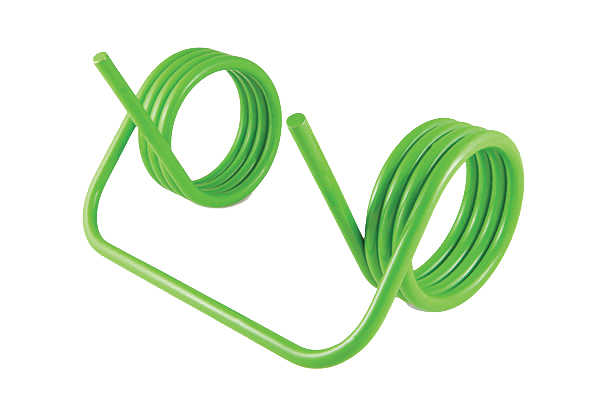
A torsion spring used as a latching mechanism in a railroad car. (Image courtesy Ace Wire Spring & Form Co.)
Springs and wire forms produced by Ace also find their way into trailer ramp-assist systems and latching mechanisms, as well as industrial assemblies that require controlled motion or force.
“Our diverse industry exposure allows us to support applications requiring tight tolerances, consistent performance, and high-reliability components,” said Inside Sales Account Manager Ritchy J. (RJ) Froehlich, in an emailed response to Design-2-Part.
Ace Wire Spring & Form Co. produces parts using advanced multi-axis CNC spring coiling and wire-forming equipment, along with in-house secondary operations to meet customer specifications. Its comprehensive custom spring and wire-form manufacturing services, along with design assistance and application support, are backed by eight-plus decades of manufacturing experience.
The company was established in 1939 by Joseph Vodvarka, a talented machinist and designer, and his son, Joseph A. Vodvarka, a highly skilled businessman. The father-son tandem began the business in their home attic, according to the company’s website.
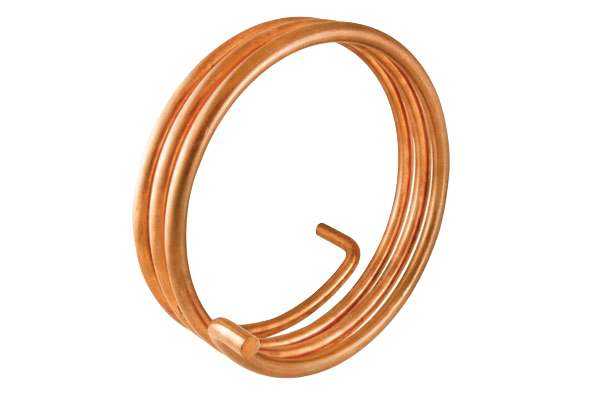
A torsion spring used in a power generation application. (Image courtesy Ace Wire Spring & Form Co.)
Some 37 years after the company’s founding, Joseph A. Vodvarka’s daughter and son-in-law, Linda Froehlich and Rich D. Froelich, bought the business from him. Today, with their children taking on key roles and grandchildren also involved in the business, the family legacy is still going strong at Ace Wire Spring & Form Co.
During its 87-year history, Ace has built a hard-earned reputation for tight-tolerance capabilities, robust design assistance and problem-solving support, and responsive communication and fast turnaround, according to RJ Froehlich. Team members work closely with customers to ensure manufacturability and performance, as well as repeatability from prototype to production.
“Ace’s biggest strength is its ability to deliver custom-engineered solutions with exceptional consistency and reliability,” RJ Froehlich said. “We focus on long-term partnerships, not just part production.”
The company operates out of a manufacturing facility totaling more than 40,000 square feet in McKees Rocks, where it employs nearly 50 skilled professionals. The facility is ISO 9001:2015 certified and ITAR registered, reflecting Ace’s commitment to quality, traceability, and compliance in demanding industries.
Froelich said that depending on part geometry and material, the Ace manufacturing team can routinely hold tight dimensional tolerances on critical features. They can also achieve consistent spring rates and load characteristics; high cycle life and repeatable performance; and controlled free length, force, and travel parameters.
“All production is supported by documented inspection and quality-control processes,” Froehlich said.
With these standards informing and guiding its operations, Ace can’t afford to stand still. Froehlich said the company continues to invest in advanced CNC spring coiling and wire-forming equipment, as well as process improvements and quality enhancements, to support increasing customer demand and more complex component requirements.
Froehlich began working in the custom springs and wire forming industry immediately after graduating from college in 2023. He expressed gratitude for the opportunity to learn under the company’s sales development manager, Tom Proteau. Froelich said Proteau brings extensive experience and an impressive career background in the precious metals industry—and now, in springs and wire forms—to his role.
“His mentorship has provided valuable perspective not only on product knowledge but also on long-term relationship building within manufacturing,” Froehlich said in an emailed response.
In February, Froelich took time out from his busy schedule to share with Design-2-Part his insights on what makes Ace Wire Spring & Form Co. a dynamic and successful problem solver for customers across diverse industries. Here’s what we learned from him.
Design-2-Part: How has the manufacturing of springs and wire forms changed since you started? What are some of the changes that you’ve seen?
RJ Froehlich: Even in my relatively short time in the industry, I have seen meaningful change driven largely by technology and customer expectations. Customers today have access to unlimited information at their fingertips, and they often research suppliers extensively before ever making contact. Because of that, manufacturers must present themselves accurately and transparently while clearly communicating their capabilities and value.
In addition, responsiveness has become more critical than ever. Customers expect fast communication, quick turnaround on quotes, and real-time collaboration. The companies that continue to add value, communicate clearly, and remain engaged partners in the business relationship are the ones that stand out.
D2P: From your vantage point, what do you see as driving the increasing customer demand you’re experiencing at Ace?
RJF: As Ace continues to grow and evolve, we have found a strong niche where customers value our technical experience and our ability to respond quickly when they are in a bind. Many of our customers operate in fast-paced environments, and when deadlines are missed or production lines are at risk, they need a supplier who answers the phone and immediately works toward a solution.
When a customer calls with an urgent situation, we discuss feasibility with our engineers and production managers within minutes. That responsiveness and collaboration build trust.
As we continue earning those opportunities, it becomes essential that we invest in equipment, process improvements, and quality systems so we can scale alongside our customers and support their increasing complexity.
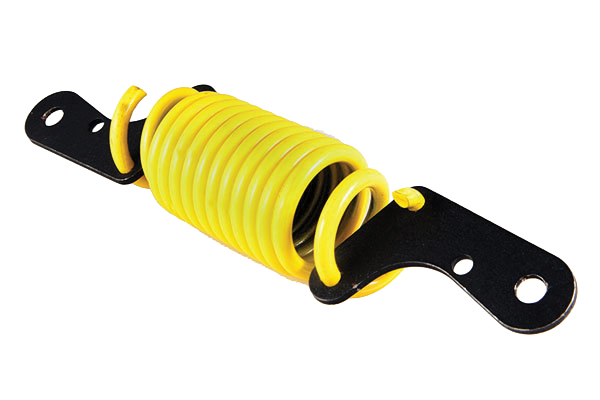
A spring for a brake shoe assembly. (Image courtesy Ace Wire Spring & Form Co.)
D2P: Ace Wire Spring & Form serves a wide range of OEM and product-manufacturing markets, from power generation, distribution, and energy to firearms and defense, rail industry, industrial equipment and machinery, and agriculture, to name just a few. Of all the industries that Ace supports, what would you say are the top three-to-five markets by parts volume?
RJF: Our top markets by volume currently include power generation, distribution, and electrification; home furniture; trailer manufacturing; agriculture and riding mower applications; and rail systems.
Each of these industries depends on reliable mechanical performance, and springs and wire forms often play a critical role in safety, motion control, and durability. Because these markets vary in scale and complexity, they also allow us to demonstrate flexibility in both low- and high-volume production.
D2P: What are some of the ways that Ace’s team members use advanced skills or expertise in manufacturing parts for your customers?
RJF: Ace’s engineering, production, and quality teams apply deep technical expertise in spring mechanics and material behavior; CNC spring coiling and wire-forming programming; and tooling optimization and process control.
They also apply their technical expertise to failure analysis and performance troubleshooting, as well as quality inspection and continuous improvement. Their experience allows Ace to support complex applications and challenging performance requirements.
D2P: What additional capabilities or services do you offer that would be of interest to a design engineer, manufacturing engineer, or purchaser?
RJF: Ace has a wide range of material offerings, including music wire, stainless steel, specialty alloys, et cetera. In addition, we offer prototyping and rapid sample development, blanket orders and scheduled releases, secondary operations and finishing, and ITAR-registered manufacturing for regulated industries. We also offer collaborative project support from concept through production.
D2P: The numerous markets served by Ace include medical-adjacent devices and healthcare equipment, which carry high standards for safety and reliability. How are Ace’s capabilities well-suited for the medical/healthcare industry, which is known for its unique and stringent manufacturing requirements?
RJF: We would best be defined as a medical-adjacent supplier. The medical and healthcare industries require extremely high regulatory standards, and some certifications and compliance structures are outside the scope of a small family-owned manufacturer. However, we have found that we add significant value to medical-adjacent opportunities where quality, traceability, and communication are critical. Our ISO 9001:2015 certification and structured quality control processes ensure consistency and accountability.
Additionally, customers often appreciate having a direct point of contact and access to a small, responsive team. Instead of navigating multiple departments, they can speak directly with decision-makers. Our collaborative approach during research and development stages often leads to larger production opportunities, which is a testament to both our engineering support and our quality control team.
D2P: Your website states, “We collaborate with startups to provide innovative spring solutions that meet the unique demands of emerging technologies and markets.” What are some of the industries that these startups serve? (Robotics, autonomous vehicles?)
RJF: In many cases, confidentiality limits how much detail we can share. On any given day, we may be assisting with a highly innovative project requiring a custom spring for performance optimization, or something as practical as replacing discontinued components for older equipment.
We have supported projects ranging from personal ergonomic tools designed to improve daily workspaces, to aftermarket automotive components, to magazine spring performance improvements in firearms applications. In many situations, customers approach us with a functional requirement rather than a full application overview. We are told how the spring must perform, and we work from there.
One project we are particularly proud of involved providing design assistance for a spring that ultimately became part of the Mars Rover program. It is exciting to say that a component we supported is now operating beyond Earth: Ace is quite literally “in space.”
D2P: Does Ace provide its secondary services—such as heat treatment, deburring, and painting, e-plating, zinc coating, and passivation—in-house, or do you subcontract them?
RJF: Secondary services are handled on a case-by-case basis. Ace has extensive experience coordinating heat treatment, deburring, painting, e-plating, zinc coating, passivation, and other finishing processes.
Some services are managed internally, while others are completed through long-standing partnerships with trusted local vendors. We have established strong working agreements with these companies, often including structured pricing, to ensure consistent quality and added value for our customers. Our goal is to provide a streamlined experience so customers can source a finished component without managing multiple suppliers.
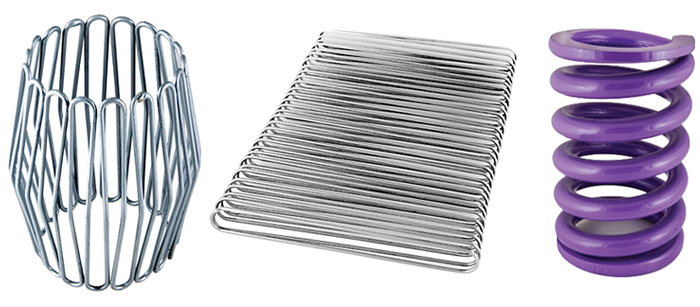
Left: A custom-engineered wire form produced by Ace Wire Spring & Form Co. (Image courtesy Ace Wire Spring & Form Co.)
Middle: A wire form component for hospital X-ray machines. (Image courtesy Ace Wire Spring & Form Co.)
Right: A heavy-duty compression spring used in a construction equipment application. (Image courtesy Ace Wire Spring & Form Co.)
D2P: You mentioned that Ace’s biggest strength is its ability to deliver custom-engineered solutions with exceptional consistency and reliability. What benefits does this provide to customers, particularly those with complex parts and requirements?
RJF: Many customers come to us with a “standard” part that simply is not performing as required. While we are sympathetic to their challenges, those situations are often where we excel. Rather than limiting customers to off-the-shelf specifications, we provide design assistance and subtle performance adjustments that can significantly improve longevity and functionality. A small change in wire diameter, material selection, stress levels, or geometry can make a measurable difference in performance.
While some suppliers focus strictly on catalog parts, we focus on delivering a component that works reliably in the real-world application. That flexibility and consistency are major advantages for customers with complex requirements.
D2P: Does Ace’s ability to go beyond providing stock or standard parts open up opportunities to provide springs and wire forms for virtually any industry, regardless of complexity?
RJF: Absolutely. Our [website’s] Industries Served page continues to grow because springs and wire forms are integrated into far more products than most people realize. We have supported individual inventors developing their first prototype, as well as large multinational manufacturers and even amusement parks.
We have worked in electrification, firearms, agriculture, rail systems, and many other sectors. Springs may sometimes be viewed as commodity components, but in reality, they are critical mechanical elements. When a spring fails, daily life and industrial operations are directly impacted. Springs are everywhere—often unseen, but always essential.
At Ace, we take pride in supporting that essential function. In many ways, it is always “springtime” at Ace Wire Spring & Form.