
ATLAS Meditech is reportedly using these innovations alongside minimally invasive techniques to treat high-risk tumors and cerebrovascular diseases with ‘unparalleled precision and safety.’
SAN FRANCISCO—ATLAS Meditech recently highlighted the capabilities of two new technologies designed to enable neurosurgeons to rehearse complex brain procedures using ultra-realistic, AI-enhanced virtual twins tailored to each patient’s anatomy, according to a release provided by the Atlas Institute of Brain & Spine.
ATLAS Simulation and the enterprise-level ATLAS Surgeon are reported to deliver “ultra-realistic, AI-enhanced virtual twin environments designed to transform brain surgery by patient-specific surgical rehearsal in neurosurgery.” They are also expected to usher in a new era in “synthetic and generative brain structure for more precise surgery,” according to the release.
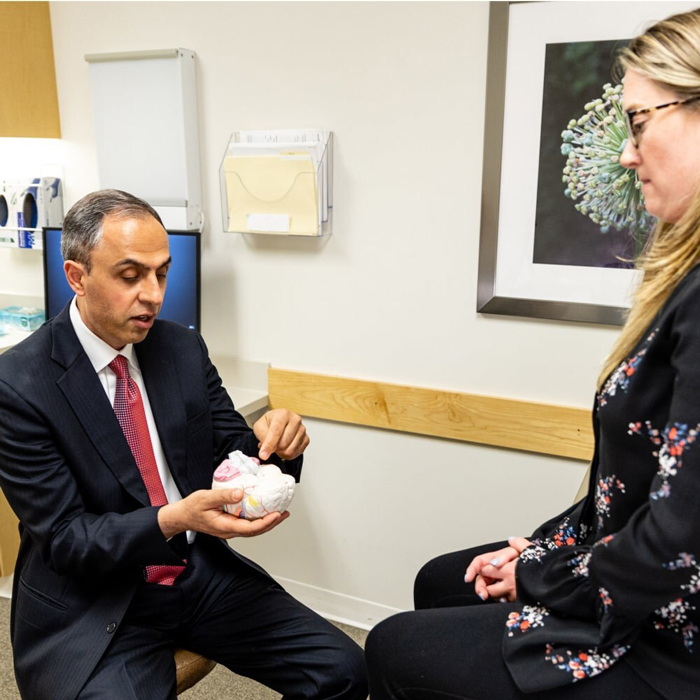
The ATLAS Institute of Brain and Spine, led by neurosurgeon Aaron Cohen-Gadol, M.D., specializes in complex brain and spine conditions. (Image courtesy ATLAS Institute of Brain and Spine)
ATLAS Simulation is an advanced neurosurgical simulation platform. ATLAS Surgeon is described as a “patient-specific, ultra-realistic platform” that can be used to enhance the effect of ATLAS Simulation by recreating the patient’s exact anatomy.
“ATLAS Simulation introduces a groundbreaking leap in neurosurgical operative planning and decision support—an immersive, anatomically precise 3D environment that allows surgeons to visualize, manipulate, and rehearse complex brain operations with unprecedented clarity,” ATLAS Meditech’s website stated. “Built as a core extension of the Neurosurgical Atlas, this interactive platform transforms traditional learning into hands-on exploration, empowering neurosurgeons at every level to refine their technique, deepen their anatomical understanding, and elevate the safety and precision of real-world surgery.”
The technology, pioneered and clinically applied at the ATLAS Institute of Brain and Spine in Los Angeles, is reported to be already elevating patient outcomes in one of the most advanced neurosurgical practices in the world.
The ATLAS Institute of Brain and Spine, led by neurosurgeon Aaron Cohen-Gadol, M.D., specializes in complex brain and spine conditions. It is currently leveraging these virtual twin innovations alongside minimally invasive techniques to “treat high-risk tumors, cerebrovascular diseases, and spine disorders with unparalleled precision and safety,” the release stated.
The technology is said to provide the “most effective surgical trajectory for high-risk brain tumors,” as advanced algorithms deliver “the safest and most efficient paths to brain tumors located in previously unreachable regions via surgery.” In addition, it is said to enable more options for minimally invasive surgery and enhancements to operating room teamwork.
“Surgeons can meticulously and confidently plan incisions, bony openings, and within an ultra-realistic virtual twin environment for optimal success, via minimally invasive routes not possible before, while ensuring adequate exposure for effective surgery,” the release stated. “An ultra-realistic virtual OR environment allows teams to plan and execute efficiently, providing a seamless workflow in the operating room, shortening the time the patient is under anesthesia.”
These platforms are said to build on ATLAS Meditech’s commitment to innovation and AI-driven decision support.
“ATLAS Simulation and ATLAS Surgeon represent the pinnacle of neurosurgical preparation,” said Cohen-Gadol, a neurosurgeon and founder of ATLAS Meditech, in the release. “By combining ultra-realistic digital twins and advanced AI algorithms, we empower surgeons to plan with unprecedented confidence, reduce risks, and improve outcomes for complex brain procedures.”
The ATLAS Institute of Brain and Spine provides neurosurgical care in Los Angeles for patients with complex brain tumors, aneurysms, arteriovenous malformations (AVMs), cavernous malformations, and spinal disorders.