
Nivalon Medical produced a patient-specific implant that combines a zirconia-toughened alumina (ZTA) ceramic architecture with a flexible elastomeric core to mimic natural spinal motion.
YOUNGSTOWN, Ohio—Nivalon Medical Technologies Inc. reported in January that it successfully produced what it described as “the world’s first fully patient-specific, motion-preserving spinal implant built entirely without metal, using AI-driven design and advanced ceramic 3D printing.”
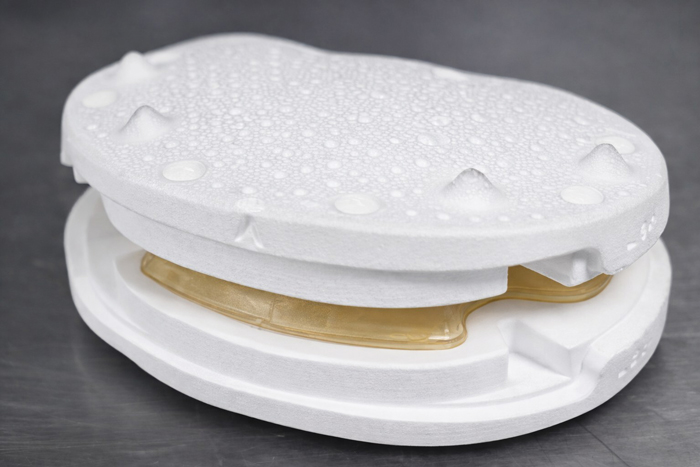
The device combines patient-specific, 3D-printed ceramic endplates that are matched directly to vertebral anatomy, with a flexible elastomeric core that is engineered to preserve native spinal motion. (Image: Nivalon Medical Technologies/PRNewswire)
According to a joint release by the Youngstown Business Incubator (YBI) and Nivalon Medical Technologies, the breakthrough device combines a proprietary zirconia-toughened alumina (ZTA) ceramic architecture that behaves like bone, with a flexible elastomeric core to mimic natural spinal motion. The combination is said to create “a new category of spinal implant engineered to match both human anatomy and natural biomechanics.”
“Unlike traditional implants manufactured in fixed sizes and made from metal alloys, Nivalon’s implant is digitally designed directly from each patient’s CT data and 3D printed to precisely match their unique anatomy,” the release stated. “The result is a bone-like ceramic structure that eliminates metal-related complications, such as corrosion, ion release, stiffness mismatch, and imaging interference, while preserving natural spinal motion.”
The first-in-human procedures are planned for 2026. One of the patients is expected to be Nivalon Medical Technologies Co-founder and CEO, Todd Hodrinsky.
The platform is reported to have undergone extensive, independent pre-clinical validation through biomechanical, mechanical, biological, and anatomical testing. Testing was conducted at the University of South Florida (USF) and the University of Connecticut Institute of Materials Science (UConn IMS).
At USF, EvoFlex™ implants were evaluated on the Dynamic Investigation of Spine Characteristics (DISC) simulator under six degrees of freedom motion and physiologic spinal loading. The process demonstrated stiffness curves and motion profiles that were said to closely replicate native human spinal behavior. These results confirm true motion preservation, not just mechanical articulation, the release stated.
At UConn IMS, compression and shear testing were reported to have demonstrated major improvements in structural performance.
“The latest design achieved compressive loads of 14.6 kN, equivalent to approximately 1,490 kg (3,280 pounds) of force, validating the ceramic-polymer architecture under physiologic and supraphysiologic loading,” the release stated. “Shear testing further demonstrated enhanced interface integrity and controlled progressive failure behavior.”
UConn IMS also conducted simulated body fluid (SBF) immersion and SEM-EDX analysis, confirming that the ZTA ceramic supports uniform mineral deposition and biologically relevant ion interaction. These analyses demonstrate bone-like surface behavior and long-term osseointegration potential. Unlike metals, the ceramic showed consistent, controlled, and predictable biological interaction, according to the release.
In addition, cadaveric pre-operative and post-operative surgical planning studies were reported to have validated the accuracy of Nivalon’s digital design platform.
“In a complex four-level spinal reconstruction, the system successfully demonstrated precise virtual bone repositioning, restoration of sagittal balance, and proper facet joint alignment, confirming the platform’s ability to anatomically reconstruct and rebalance the spine with high precision,” the release said.
Youngstown Business Incubator enables advanced ceramic manufacturing
This milestone was achieved through a strategic collaboration with the Youngstown Business Incubator and its Advanced Manufacturing and Engine Tech programs. Nivalon used XJet’s NanoParticle Jetting™ ceramic 3D printing technology to successfully develop and manufacture a pure ceramic, load-bearing spinal implant architecture.
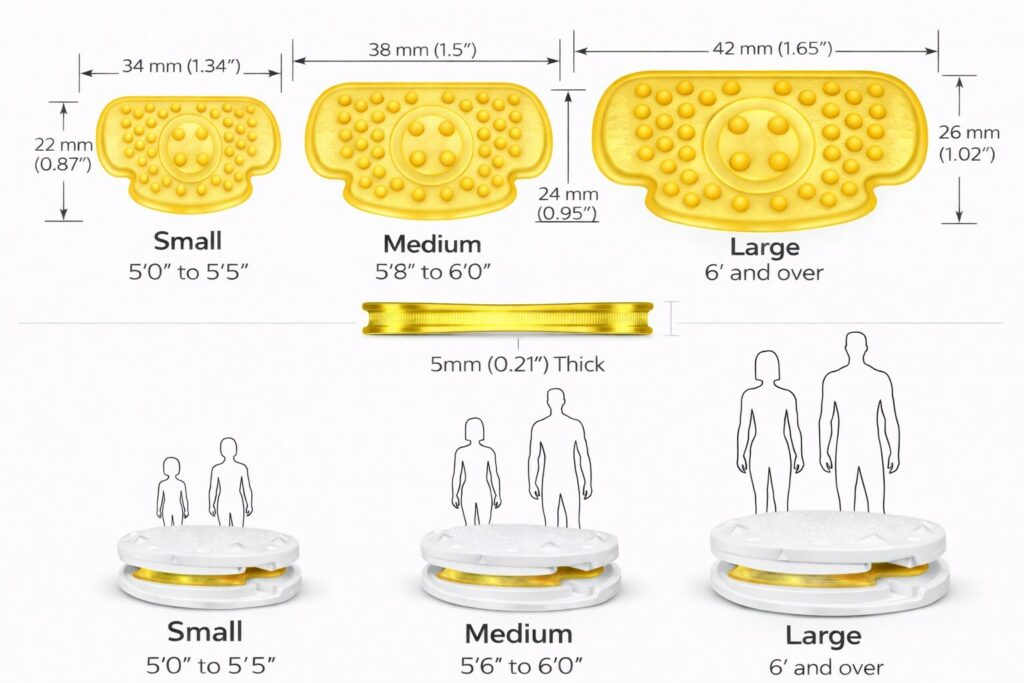
Unlike traditional implants manufactured in fixed sizes and made from metal alloys, Nivalon Medical’s implant is digitally designed directly from each patient’s CT data and 3D printed to precisely match their unique anatomy. (Image: Nivalon Medical Technologies/PRNewswire)
Scanning electron microscopy (SEM) analysis at UConn confirmed that the printed ZTA ceramic represents a new and distinct microstructural class of biocompatible implant material.
“This marks a medical industry first: a fully ceramic, metal-free, load-bearing spinal implant manufactured with repeatable, reliable, and scalable production methods,” the release stated.
According to Hodrinsky, he realized that the problem wasn’t the surgeons. Instead, it was the implants.
“We were trying to treat a living biological structure with industrial metal hardware that was never designed to behave like bone or properly follow natural spinal motion,” he said in the release. “We knew we could engineer something fundamentally better.”
What began as a personal mission between Hodrinsky and co-founder Marcel Janse has evolved into a new paradigm for spinal care—one that replaces metal with bone-like ceramic, generic sizing with patient-specific design, and rigid motion with natural biomechanics and patient-specific design, the company said in the release.
Engineering highlights
The EvoFlex™ platform is reported to offer a unique combination of features:
- Patient-specific, 3D-printed ceramic endplates that are matched directly to vertebral anatomy
- Bone-like ceramic material that eliminates metal corrosion, ion release, and imaging artifacts
- A flexible elastomeric core that is engineered to preserve native spinal motion
- Full MRI and CT compatibility
- A surgeon-controlled digital design workflow
“This is the first fully ceramic, patient-specific spinal implant platform ever developed,” according to the release. The prototype signifies the transition from research into scalable clinical manufacturing. With two issued U.S. patents and six additional patents pending, Nivalon stated that it is preparing for NIH Phase II SBIR funding, FDA PMA clinical trials, and first-in-human procedures in 2026.
“This is more than a technical achievement—it’s personal,” said Hodrinsky and Janse, in a joint statement. “The endplates for my own spine are now complete. This is the difference between living with chronic complications and restoring a normal, active life.”
According to Nivalon Medical, its work is “where innovation meets precision in spinal healthcare.”
“Our mission is to lead innovation in spinal surgery and healthcare through personalized solutions that enhance surgical precision, shorten recovery times, reduce complications, and improve long-term quality of life,” the company said in the release. “We are committed to revolutionizing the way spine conditions are diagnosed and treated. With years of research and development behind us, we are committed to leading the next generation of spinal healthcare.
The Youngstown Business Incubator describes itself as a globally recognized economic development nonprofit that advances innovation and growth across Ohio and beyond. Through a flexible suite of high-quality entrepreneurial services and resources, YBI supports startups, small businesses, and manufacturers at every stage of development.
“The mission of the YBI Engine Tech Incubator Program is to empower technology-driven startups with tailored incubation and acceleration services that guide entrepreneurs with access to industry experts, commercialization assistance, pitch deck development, introductions to marquee customers, and any other needs that may arise,” the release stated. “The goal is simple—to help, not hinder, startups.”
The YBI’s Advanced Manufacturing program offers hands-on support to enable companies to integrate additive manufacturing, adopt emerging technologies, and enhance their production capabilities. Youngstown Business Incubator is home to the Center of Excellence for Advanced Manufacturing and serves as a lead partner of the Youngstown Innovation Hub for Aerospace & Defense, led by America Makes, the release said.