
Backed by $50 million in Series A funding, the precision parts manufacturer is planning to grow in 2026 from six to 25 AI-powered factories in the U.S., UK, Germany, France, and Ukraine.
DALLAS and LONDON—Component manufacturing is a market worth $1.8 trillion a year. Yet small businesses account for 95 percent of production and they are rapidly disappearing, according to Isembard, a high-precision parts manufacturer that operates factories across Europe and the United States.
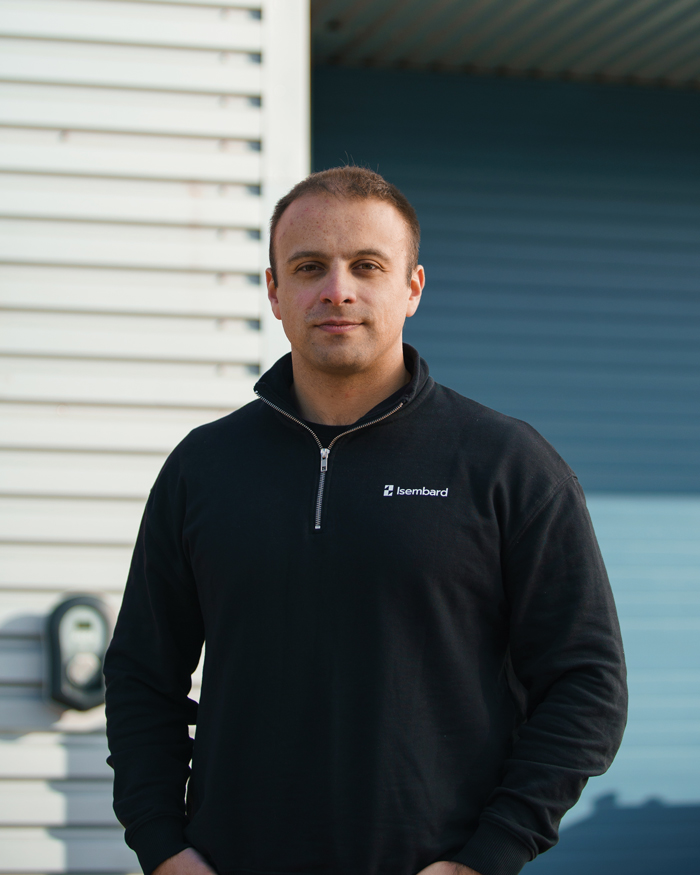
Isembard CEO Alex Fitzgerald. (Image courtesy Isembard)
“The average owner is over 65 years old and 40 percent plan to retire within five years,” the company stated in a release. “This erosion of industrial capacity is colliding with surging demand from aerospace, defense, energy, and robotics companies, given re-shoring and spending increases on critical industries. Without decisive action, the widening gap between supply of factories and demand from customers risks hollowing out the industrial base of Europe and North America.”
Isembard is the developer of a proprietary software and AI system, MasonOS, which powers advanced automation and efficiency across its factories and franchisee factories. Founded in 2024 and headquartered in London, the company announced in March that it raised $50 million in Series A funding, less than 12 months after completing its seed funding round. Isembard will use the capital to accelerate its plans to open 25 factories by the end of 2026 while expanding its engineering teams and launching into Germany, France, and Ukraine, the company said in the release.
The round was led by Union Square Ventures, an early backer of Twitter, Coinbase, Etsy, Abridge, and Twilio. New investors Tamarack Global and IQ Capital joined the round alongside existing investors Notion Capital and CIV. Angel investors are reported to include Alex Bouaziz (founder and CEO of Deel), Andrei Danescu (founder and CEO of Dexory Robotics) and Matt Briers (formerly CFO of Wise).
“Manufacturing is the origin of our security, prosperity, and sense of purpose as nations,” said Alexander Fitzgerald, founder and CEO of Isembard, in a statement. “This Series A enables us to open more factories, invest in MasonOS, support exceptional franchisees, and recruit the best engineers across Europe and the United States. Our mission is to forge industrial acceleration.”
Isembard manufactures high-precision components for some of the world’s most demanding customers in the aerospace, defense, energy, and robotics industries. Its factories, as well as its franchisee factories, are differentiated by MasonOS, which runs them.
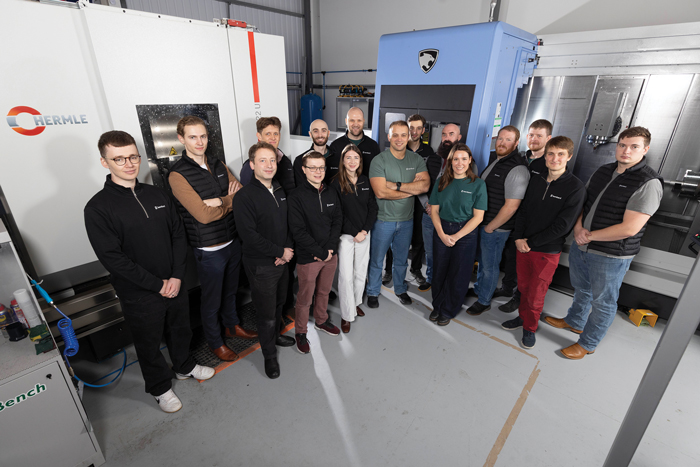
The Isembard team. (Image courtesy Isembard)
MasonOS is reported to integrate quoting, scheduling, supply chain, manufacturing, quality control, and delivery into a single intelligent agentic operating layer, automating and continuously optimizing factory performance. The company identifies exceptional operators—from manufacturing, the military, franchising, and the wider economy—and equips them with its technology, brand, engineering standards, and access to customer demand.
“Franchisees can launch new Isembard factories from the ground up or convert existing businesses into an Isembard factory,” the company said in the release. “This approach enables rapid expansion of high-quality manufacturing capacity while preserving local ownership and strengthening sovereign industrial capability across the United Kingdom, United States, and Europe.”
Rebecca Kaden, managing partner at Union Square Ventures, said that Isembard “is redefining the process of owning and running a factory.”
“By embedding deep operational expertise into an agentic OS, MasonOS lowers the barrier to operating high-performance manufacturing businesses and enables a networked, capital-efficient path to scale,” she stated in the release. “At a moment when demand for advanced manufacturing is accelerating and interest in SMB (small- and medium-sized business) ownership is rising, Isembard brings both forces together. We’re excited to partner with Alexander and his team as they expand access to factory ownership and rebuild industrial capacity across the West.”