
Patton’s new device is said to provide an innovative approach to safeguarding sensitive information.
GAITHERSBURG, Md.—A new data diode, small form-factor pluggable (SFP) module introduced by Patton, a U.S. manufacturer of cybersecurity products, represents what the company described as “a new generation of high-security pluggable optics.”
In an era of rampant data breaches and cyber threats, Patton’s FiberPlex QSFX-100DD Data Diode SFP Module is said to provide an innovative approach to safeguarding sensitive information. It does so by ensuring that data flows in only one direction—with no possible return path, according to a release from Patton.
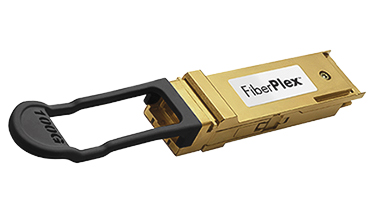
Patton’s FiberPlex QSFX-100DD 100 Gigabit QSFP Data Diode Module is reported to provide unidirectional cyber security. (Image courtesy Patton)
The QSFX-100DD data diode “spearheads a paradigm shift in the way organizations protect and manage massive amounts of sensitive information,” the release stated.
High speed is a hallmark of the QSFX-100DD. Leveraging 100GBASE-LR4 technology and providing four independent 25 Gbps channels, the device is reported to offer unidirectional speeds up to 100 Gbps. A rugged brass enclosure provides durability and maximum EMI/RFI containment, the company stated in the release.
“By deploying data diodes, organizations can achieve reliable network protection without compromising data availability,” said Bob Mohr, head of Patton’s Government Solutions Group, in the release. “This product is particularly vital for government agencies and industries with stringent compliance requirements.”
The unidirectional, secure data-flow module supports guidance from the U.S. Department of Homeland Security for secure network architectures. In addition, hardware-enforced data diodes that deliver 100-Gigabit speeds address the growing need for cybersecurity in large data centers, the company said in the release.
The QSFX-100DD Data Diode is reported to enhance cybersecurity across numerous market sectors in addition to government and cloud services. These sectors are reported to include finance, healthcare, telecommunications, energy, utilities, manufacturing, education, and research. The module is currently available for pre-order, and delivery is expected in April 2026, according to Patton.