
The global market for carbon fibers is projected to reach $16.0 Billion by 2032,
According to a market research report.
WILMINGTON, Del.—Increasing adoption of carbon fiber components in the automotive industry and stringent government regulations aimed at reducing carbon emissions are fueling significant growth in the global carbon fiber market, according to a report published recently by business intelligence firm Allied Market Research.
“The carbon fiber market was valued at $5.5 billion in 2022 and is projected to reach $16.0 billion by 2032, registering a CAGR (compound annual growth rate) of 11.4 percent from 2023 to 2032,” the company said in a release highlighting the findings of its report. The report is titled “Carbon Fiber Market by Raw Material, Type, Form, End-Use Industry, and Region: Global Opportunity Analysis and Industry Forecast, 2023–2032.”
Gaining momentum across industries
Carbon fiber is widely recognized for its exceptional mechanical and physical properties, including high tensile strength, superior stiffness, excellent strength-to-weight ratio, chemical resistance, thermal stability, and minimal thermal expansion. These characteristics are reported to make it an ideal material for applications across aerospace, defense, automotive, civil engineering, wind energy, marine, and sporting goods industries.
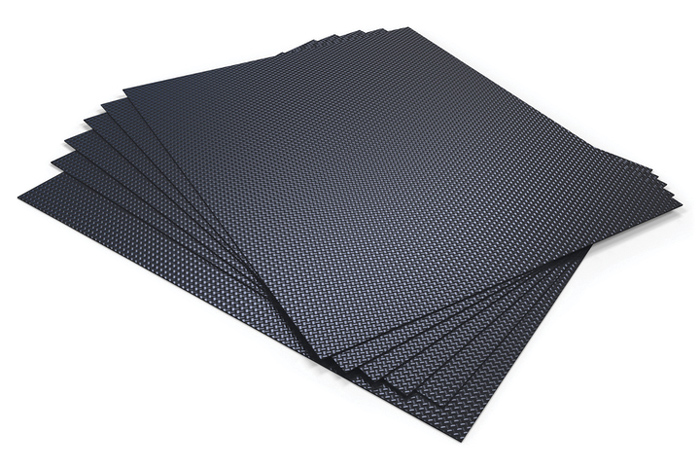
Carbon fiber’s exceptional mechanical and physical properties are said to make it an ideal material for applications across the aerospace, defense, automotive, civil engineering, wind energy, marine, and sporting goods industries. (Image: Allied Market Research/EIN Presswire)
As industries continue to prioritize lightweight and fuel-efficient materials to reduce emissions and improve performance, the demand for carbon fiber is expected to grow substantially throughout the forecast period.
Key drivers of market growth
According to Allied Market Research, the growth of the global carbon fiber market is primarily attributed to two factors: rising penetration of carbon fiber components in the automotive manufacturing industry, and increasing government regulations focused on emission reduction and fuel efficiency. However, factors such as the lengthy production cycle and limited availability of carbon fiber materials are expected to continue to restrain market growth.
“On the other hand, expanding applications in the medical sector are expected to create lucrative opportunities for manufacturers over the coming years,” the release stated.
Segment insights
By type, the continuous carbon fiber segment accounted for more than 80 percent of the global market revenue in 2022, according to the release, and is expected to maintain its leadership through 2032. It is also projected to register the fastest CAGR (11.5 percent) during the forecast period.
“Continuous carbon fiber composites offer exceptional durability and corrosion resistance, reducing maintenance and replacement costs across structural applications,” the release stated. “These performance benefits continue to drive demand across aerospace, automotive, and infrastructure projects.”
PAN-based carbon fiber leads by raw material
Based on raw material, the PAN- (polyacrylonitrile) based carbon fiber segment held over 90 percent of the global market share in 2022. It is anticipated to maintain its dominance during the forecast period while growing at a CAGR of 11.4 percent.
“PAN-based carbon fiber remains the preferred choice for aerospace applications due to its lightweight nature, high strength, low thermal expansion, moisture resistance, and excellent thermal conductivity,” according to the release. “Continuous advancements in precursor processing are expected to further enhance product performance and market demand.”
Composite carbon fiber remains the preferred form
The composite segment represented more than 90 percent of total market revenue in 2022 and is expected to continue leading the market through 2032.
Composite carbon fibers deliver superior tensile strength, impact resistance, and flexural performance. These properties are said to make them ideal reinforcement materials for high-performance composite structures used across transportation, construction, aerospace, and industrial applications.
Regional outlook
Europe emerged as the largest regional market in 2022, accounting for more than one-third of global revenue, and is expected to maintain its leadership throughout the forecast period.
“Germany’s advanced manufacturing capabilities, strong engineering expertise, and increasing adoption of automated production technologies—including Automated Fiber Placement (AFP) and resin infusion—continue to strengthen the region’s position in the global carbon fiber industry,” the release stated.
Meanwhile, the Asia-Pacific region is projected to have the highest growth, registering a CAGR of 11.9 percent through 2032. This growth is expected to be driven by rapid industrialization, expanding automotive production, and increasing investments in renewable energy and aerospace sectors, according to the release.
The global carbon fiber market report offers insights into the competitive landscape, including company profiles, product portfolios, business performance, operating segments, and recent strategic developments. These insights are said to be help enable stakeholders to make informed business decisions.
Key companies operating in the global carbon fiber market are reported to include Solva, Teijin Limited, Toray Industries, Inc., ZOLTEK, and Mitsubishi Chemical Group Corporation. Also among them are DowAksa, Nippon Steel Corporation, Formosa Europe, and SGL Carbon.
“These industry leaders are actively focusing on strategic initiatives such as product innovation, partnerships, collaborations, mergers and acquisitions, capacity expansion, and joint ventures to strengthen their global presence and expand their market share,” the release said.