
Spectra Defense Technologies’ IP67-rated system offers a compact, low-SWaP form factor.
ALPHARETTA, Ga.—A rugged mission computer launched this summer by Spectra Defense Technologies (Spectra) is reported to deliver high-performance processing in a smaller, lighter, and more adaptable form factor for next-generation defense platforms.
The XSR Spire, powered by the Intel Xeon-W Gen11 processor, is said to build on Spectra’s mission-proven XSR family with IP67 ruggedization, enhanced convection cooling, open-standard interfaces, and flexible expansion options. The system is designed to deliver resilient, reliable computing capability at the tactical edge for European, U.S., and allied defense programs, according to a release from Spectra.
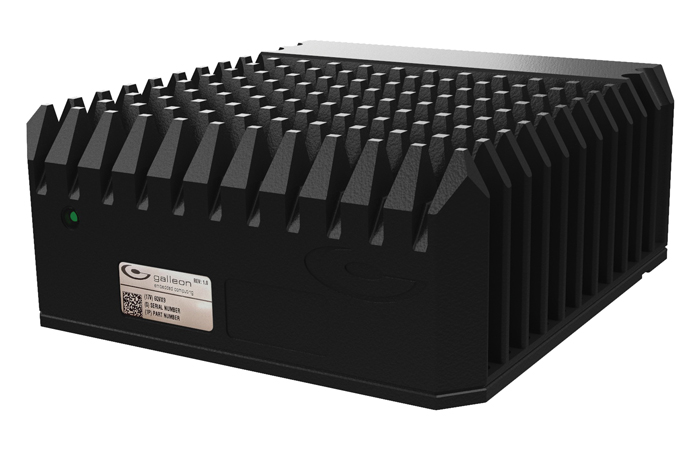
XSR Spire is said to reflect Spectra’s continued investment in ruggedized, COTS-available technologies aligned with defense modernization priorities. (Image courtesy Spectra Defense Technologies)
The company said XSR Spire’s compact form factor supports integration across next-generation ground vehicles, aircraft, maritime vessels, unmanned systems, sensor payloads, and other size- , weight- , and power (SWaP)-constrained platforms operating in some of the world’s most challenging mission environments.
“The XSR Spire is the latest addition to our XSR product family, bringing proven ruggedized computing performance into a smaller, IP67-rated form factor for low-SWaP platforms that require more processing capability without added size, power, or cooling demands,” said Terje Melsom, chief technology officer of Spectra Defense Technologies-Norway, in a statement. “Its open architecture and modular design enable customers to easily integrate new capabilities as mission needs evolve, without requiring a full platform redesign. Intentionally built with all-domain operations in mind, XSR Spire helps end users process mission-critical data closer to the edge to maintain a tactical advantage across today’s rapidly evolving battlespace.”
In today’s operating environments, defense users need to collect, process, and act on mission data faster across increasingly distributed platforms. XSR Spire is designed to help support that information advantage by providing end users with the rugged computing architecture needed to process mission data, support interoperable systems, and enable faster decision-making across distributed, all-domain operations, the company said.
According to Spectra, XSR Spire supports flexible configuration through expansion options for one XMC module or two Mini PCI Express (mPCIe) modules. The system natively supports key network and platform interfaces, including 1000Base-T, 10GBase-T, serial ports, USB, and VGA/DVI. Its expansion options further enable customers to integrate commercial off-the-shelf (COTS) capabilities, such as 1000Base-SX, 10GBase-SR, internal solid-state drive (SSD), Controller Area Network bus (CAN) bus, military standard (MIL-STD)-1553, ARINC-429, and other mission-specific interfaces as requirements evolve.
“The new XSR Spire reflects Spectra’s continued investment in ruggedized, COTS-available technologies aligned with defense modernization priorities,” the release stated. “Building on the company’s proven XSR family used across mission computing, server, recorder, and network-attached storage applications, XSR Spire provides customers with a resilient, reliable next-generation mission computing solution built to support current operational requirements while providing the flexibility needed to integrate new capabilities as mission needs evolve over time.”
Spectra Defense Technologies is a global provider of C5ISR solutions for aerospace and defense customers. The company said it delivers fully integrated mission systems, data recorders, secure networking, edge computing, robust data-at-rest encryption, and advanced visualization that capture, process, and display mission-critical data across air, land, sea, and space.
“Backed by engineering, sales, and production teams in North America and Europe, Spectra combines global reach with agile innovation to meet evolving end-user needs with speed and precision,” the company said in the release. “Guided by a culture of innovation and deep customer partnership, we build enduring trust through open-architecture designs, technical excellence, and resilient systems designed to meet today’s mission needs and anticipate tomorrow’s demands for the U.S., NATO, European defense organizations, and allied partners worldwide.”