
The global automotive forging market was valued at USD 54.96 billion in 2025 and is projected to grow from USD 57.59 billion in 2026 to USD 82.44 billion by 2034—a CAGR of 4.60 percent over the forecast period.
Forging, a manufacturing process that uses compressive forces to shape metal into parts with high mechanical properties, is known to produce some of the strongest manufactured parts.
For the automotive industry, manufacturers employ forging to produce parts such as chassis, bearings, axles, gears, and engine parts, among others. Worldwide demand for lightweight and fuel-efficient vehicles is expected to propel the growth of the automotive forging market through 2034, according to a report by market intelligence firm Fortune Business Insights.
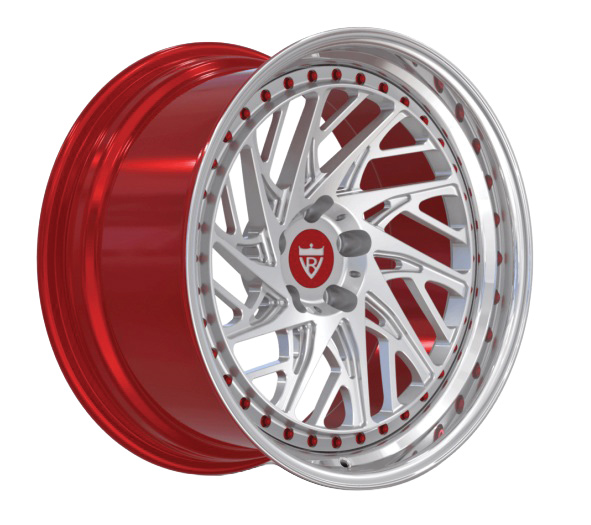
Because of their dense grain structure and structural integrity, forged wheels are built to withstand demanding driving conditions over extended periods. (Image: RVRN/EIN Presswire)
In addition, forged components provide high mechanical properties—including rigidity and strength—that make them well-suited for vehicle manufacturing, the company said in a release highlighting key sections of its report, “Automotive Forging Market Size, Share, & Industry Analysis.”
According to the release, the global market for automotive forging was valued at USD 54.96 billion in 2025, with the Asia Pacific region claiming the highest market share at 61.02 percent. The market is projected to grow from USD 57.59 billion in 2026 to USD 82.44 billion by 2034, gaining $24.85 billion at a compound annual growth rate (CAGR) of 4.60 percent during the forecast period.
During the COVID-19 pandemic, a decline in vehicle sales reduced the demand for automotive components. The International Automobile Manufacturers Association (OICA) estimated that car sales in 2020 fell by 13.7 percent compared to 2019. The volatility in raw material prices during the pandemic, resulting from supply chain disruptions and material unavailability, also hit the global automotive forging industry.
“Rising raw material prices hampered market growth, especially in developing countries where inflation is very high,” the release stated. “For instance, in India, in January 2021, hot-rolled steel coil prices in the wholesale market reached USD 710.32 per ton, from USD 485.45 per ton in July 2020.”
In its Automotive Forging Market report, Fortune Business Insights provides key market insights on passenger cars, light commercial vehicles, medium and heavy commercial vehicles, agriculture machinery, construction equipment, and others.
The report also analyzes automotive forging market segments by material type (steel and aluminum), application (gears, crankshaft, pistons, axle, bearings, connecting rods, and others), technology (closed die forging, open die forging, and others), and supplier type (local and international). It also offers market forecasts for specific regions, covering 2026 to 2034.
Trends in the automotive forging market
An ongoing trend in the automotive forging market is the acceptance of automation and intelligent manufacturing technologies. “Nearly all of the leading players” are focusing on “automating their forging lineup to increase operational efficiency, overall productivity, and safety,” according to the release. Due to this trend, the adoption of smart manufacturing technology and automation are expected to propel the market’s growth during the forecast period.
In September 2021, ThyssenKrupp AG established its advanced forging line in Homburg/Saarland, initiating what is described as “one of the most advanced forging lines in the world.” The company reportedly invested approximately USD 85 million in its new automotive forging facility for truck chassis components, the release said.
“The flagship of the new highly automated and digitized forging line in Homburg is a 16,000-ton forging press, measuring nearly 15 meters in height and weighing 1,700 tons,” the release stated. “The new line has the capacity to produce 360,000 forged components per year and will be able to make different large-scale products.”
According to Fortune Business Insights, increasing demand for lightweight vehicles, or those with reduced overall weight, is also propelling market growth. It anticipates that adoption of automation and smart manufacturing technologies—intended to improve quality, precision, and productivity in the automotive forging line—will accelerate growth of the market growth in the near term.
Rising automotive sales drive market growth, but EV penetration could hinder it
Rising automotive sales translate to higher demand for forged components. Forged engine parts, transmission components, steering systems, and chassis parts offer strength, durability, and precision, all of which are known to be crucial for vehicle performance and safety.
“Forged components offer better efficiency and cost-effectiveness compared to components made through other manufacturing processes,” the release stated. “They often require less machining, resulting in lower production costs and faster turnaround times, which is attractive to automakers looking to meet the growing demand for vehicles while maintaining profitability.”
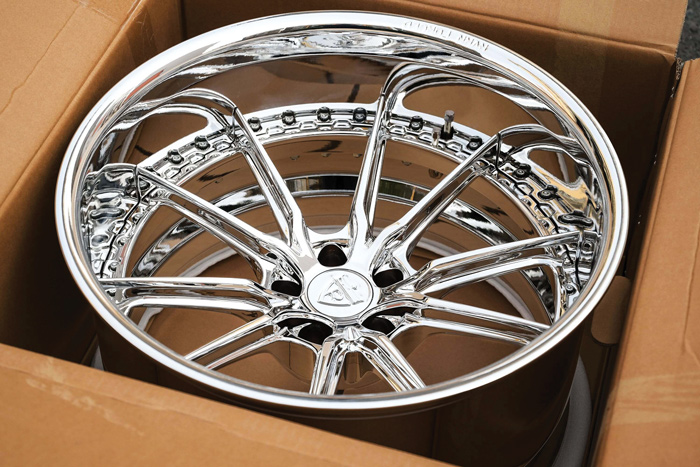
Custom forged wheel manufacturer RVRN Wheel reports that it combines aerospace-grade materials, high-pressure forging, and precision CNC machining to create wheels capable of supporting track-level stress and everyday driving demands. (Image: RVRN/EIN Presswire)
Automotive manufacturing companies are one of the major buyers of forged metal products and components. At the same time, growing environmental concerns, rising government initiatives to promote green mobility, increasingly stringent emissions regulations, and escalating fuel prices are driving electrification in the automotive industry.
“Almost all major automakers focus on developing electric vehicles as economical solutions for future mobility,” the release stated.
However, electric vehicles have fewer moving parts and fewer forged parts than conventional vehicles. That’s why the rising popularity and acceptance of electric vehicles and increasing electrification in the global automotive industry will likely hinder growth of the automotive forging market during the forecast period.
Statistics from the International Energy Agency (IEA) show that in 2022, approximately 10.2 million passenger electric cars were sold, versus about 6 million in 2021. In 2024, electric car sales topped 17 million, an increase of 3.5 million, or 25 percent. The additional 3.5 million electric cars sold in 2024 reportedly outnumbered the total sold in all of 2020—about 3 million, according to IEA.
Going forward, various government initiatives that offer tax breaks and subsidies for purchasing new electric vehicles are expected to boost EV adoption in emerging markets. Electric vehicles are expected to penetrate deeply across vehicle sales worldwide during the forecast period, further slowing the demand for automotive forging products, the release said.
Market analysis by vehicle type
By vehicle type, the report breaks the market down into categories that include passenger cars, light commercial vehicles, medium and heavy commercial vehicles, agricultural machinery, construction equipment, and others.
The passenger cars segment is projected to reach 74.38 percent of the global market share in 2026, and is anticipated to continue its dominance throughout the forecast period. According to the Organisation Internationale des Constructeurs d’Automobiles, for example, passenger car production increased in 2022 by 7.9 percent over the previous year. Production of passenger cars reportedly reached 61.6 million units in 2022, up from 57 million units in 2021.
“The design of mechanical components in electric cars will be much simpler as designers can create significant impacts with simple geometries,” the release stated. “Forged aluminum parts perform better than machined or cast parts, increasing reliability. These factors can positively impact the growth of the market.”
The construction equipment segment, meanwhile, is expected to grow at what is described as “a significant CAGR from 2023 to 2030.”
Ferrous forgings are used widely in heavy construction and off-highway equipment, due to the need for strength, machinability, and toughness. In addition to transmission and engine parts, forgings in this segment are used for axle beams, gears, wheel hubs, bearing holders, shafts, levers, links, yokes, rollers, and spindles. Increasing demand for these automotive forged parts is anticipated to drive the segment growth, according to the release.
Other segments, including light commercial vehicles and agricultural equipment, are also projected to show a positive growth rate during the forecast period. Production volumes for medium and heavy commercial vehicles showed positive recovery in 2021. For instance, in key markets such as India, Brazil, the U.S., and Mexico, sales volumes reportedly increased by 75 percent, 101 percent, 20 percent, and 22 percent, respectively.
By material type
By material, the automotive forging market is segmented into aluminum and steel. According to Fortune Business Insights, the steel material segment is projected to reach a 64.66 percent market share in 2026.
The demand for carbon steel is high in the automotive industry, possibly fueling the market growth during the forecast period. The report attributes this to the high forgeability of the material, as well as its impact strength, production efficiency, and economic utilization.
Vehicle weight reduction is one of the many factors that affect fuel economy and performance.
A material known for its ability to reduce vehicle weight is aluminum, which is projected to be the fastest-growing segment in automotive forging throughout the forecast period. The use of aluminum in the automotive industry increased from 154 kg per vehicle in 2010 to 208 kg per vehicle in 2022, according to a study published in Current Trends in Automotive Lightweighting Strategies and Materials.
“For internal combustion engine (ICE) vehicles, with 10 percent less weight, fuel economy will improve by 6-8 percent,” the release stated. “A lower-weight alternative to steel is aluminum, which is highly recovered and reused. The increasing demand for lightweight material is supporting aluminum in the automotive forging industry.”
By application
By application, the market is categorized into crankshaft, gears, piston, axle, bearings, connecting rods, and others.
An axle is a shaft that connects a pair of wheels to propel them and retain their position relative to one another. The axle segment is projected to reach 33.19 percent of the global market share in 2026. The segment also comprises applications for other automotive forged components, such as input/output shafts, chassis, high-pressure valves, and others.
The growing use of special purpose vehicles and mining and defense purpose vehicles has resulted in a fast projected growth rate of the “others” segment over the forecast period. Forged engine and powertrain components include connecting rods, differential gears, clutch hubs, transmission shafts, crankshafts, drive shafts, and universal joint yokes.
“Forged gears, pinions, camshafts, and rocker’s arms offer strength and ease of selective hardening,” the release noted. “Axle beams and shafts, idler arms, linkages, steering arms, wheel spindles, and torsion bars for passenger cars, trucks, and buses characterize applications that require substantial toughness and strength. Hence, forging is a suitable manufacturing process for automotive components.”
By technology
By technology, the market is divided into open die, closed die, and others. The closed die segment, which helps produce components with complex profiles, has dominated the market in 2026 with a market share of 74.04 percent. Closed die technology also offers an excellent surface finish and excellent mechanical properties, further reducing processing requirements.
The open die segment is projected to grow at a significant growth rate from 2023 to 2034, according to the release. It is driven by increasing demand for “simple geometry forged products,” including shafts, axle beams, forks, and ball joints. By producing parts with inherently high strength-to-weight ratios, open die forging is well-suited to achieving part weight savings. Die forging machines are installed in almost all types of forging units to produce high-quality development products efficiently, the release said.
By supplier type
By supplier type, the market is segmented into local and international (import) categories. A major driving factor for growth of the local segment, according to the release, is the import of auto ancillaries and electric vehicle components from China and other Asian countries to Europe and North America.
The international segment is expected to show a positive growth rate in the forecast period. Reasons for the growth are reported to include low production costs, economies of scale, government initiatives to tackle trade barriers, and manufacturing incentive schemes.
Regional Insights
Regionally, the market is classified into North America, Europe, Asia Pacific, and the rest of the world.
Increased military spending is expected to propel market growth in the Asia Pacific region.
The region has maintained a strong presence in the global market, reaching USD 33.54 billion in 2025 and accounting for a 61.02 percent share of the market. The Asia Pacific market, projected to reach USD 35.32 billion in 2026, is expected to be the dominant and fastest-growing market. China and India are reported to account for “a huge share of forged components produced.”
For 2026, the Japan market is projected to reach USD 3.82 billion by 2026, the China market is projected to reach USD 23.04 billion by 2026, and the India market is projected to reach USD 3.60 billion by 2026.
According to the release, new investments by major regional players are focused on automation and high-level machinery with low energy consumption and higher efficiency. The presence of key players in the region is projected to boost the growth of the forging market in the respective countries.
North America contributed approximately USD 5.93 billion to the global market in 2025, accounting for 28.32 percent share, and is expected to reach USD 6.23 billion in 2026. “North America is expected to increase steadily in the global market owing to the increasing demand for forged automobile parts,” the release stated.
Positive recoveries in the production of light commercial vehicles (LCVs) and heavy trucks, combined with a higher need for replacement in these segments, are projected to positively impact the demand for forged parts in North America.
The Europe region captured 19.90 percent of the global market in 2025, generating USD 10.94 billion in revenue, and is projected to reach USD 11.36 billion in 2026.
“Europe is expected to grow significantly due to alternative production techniques in the forging industry,” the release stated. “Government regulations support locally manufactured products, propelling the expansion of the Europe market.”
Brazil and Turkey are reported to be introducing auto sector policies that provide additional tax benefits to manufacturers who invest in technological developments.
“Such regulations have encouraged many automakers to adopt advanced manufacturing processes,” the release stated. “These factors will positively impact the market growth in the rest of the world. The UK market is projected to reach USD 1.01 billion by 2026 and the Germany market is projected to reach USD 4.41 billion by 2026.”
The Rest of the World (ROW) market is reported to have generated USD 4.11 billion in 2025, representing 7.49 percent of the global market landscape. It is expected to reach USD 4.32 billion in 2026, according to the release.
Among the key companies profiled by Fortune Business Insights in the report are ThyssenKrupp AG (Germany), CIE Automotive (Spain), NTN Corporation (Japan), American Axle and Manufacturing Inc. (U.S), now known as Dauch Corporation; Bharat Forge Limited (India),
Ramkrishna Forgings (India), Dana Limited (U.S.), Meritor Inc. (U.S.), and ZF Friedrichshafen AG (Germany).
Source:
https://www.fortunebusinessinsights.com/automotive-forging-market-105153